Brian Hurst
Castlereagh, Northern Ireland, February 12, 1895 - 26.09.1986, London, Great Britain
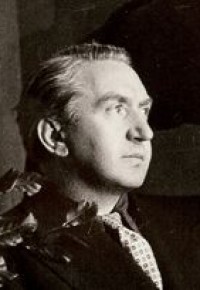
Hurst is a director and screenwriter from Ireland, born Hans Moore Hurst to a working class family. He joined the army in the beginning of WWI, and changed his name to Brian. He survived the battle at Gallipoli and after the war, around 1920, moved to Canada. He wanted to become an artist and attended the art college in Toronto. After two years he moved to Paris and enrolled in the art academy (École des Beaux-Arts). He began working on films upon his arrival to Hollywood, where he at first worked as a helper on film sets. He soon became lifelong friends with John Ford, who was also his mentor. He took his first serious steps forward in film upon his return to Ireland in 1933. He made his debut with Irish Hearts (1934), which was one of the first Irish sound films, and afterwards directed the historical film Ourselves Alone (1936) about the Irish War for Independence from England. It caused a certain amount of controversy and was banned upon its release in Northern Ireland. He then directed On the Night of the Fire (1939), one of the first British film noires. During WWII, he made Dangerous Moonlight (1941) and worked for the Ministry of Information making short propaganda films. After the war ended, he made the feature and documentary film about the battle of Arnhem Theirs Is the Glory (1946), which became a great commercial success. His adaptation of Dickens’ Scrooge (1951) was equally successful. He returned to war topics in Malta Story (1953), Simba (1955) and The Black Tent (1956), then dealt with issues typical of Ireland in Hungry Hill (1947) and his last film Playboy of the Western World (1963).