Satyajit Ray
02.05.1921, Calcutta, India - 23.04.1992, Calcutta, India
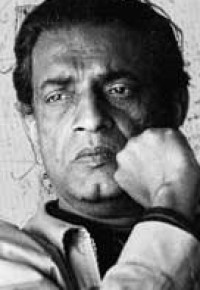
Ray is an Indian screenwriter, director and film music composer. After studying science and economy at the Calcutta University, he enrolled to Viswa-Bharati University where he studied art. He founded the first film association in Calcutta in 1947 and three years later he met Jean Renoir when Renoir was filming The River India. Starting with his first film, Pather Panchali (1955), Ray attracted attention of the international public. Pather Panchali together with the film The Unvanquished (Aparajito, 1956), won the Golden Lion in Venice in 1957. Those two films and The World of Apu (Apur Sansar, 1959) make up the famous “Apu trilogy”. Afterwards, he made The Goddess (Devi, 1960), Three Daughters (Teen Kanya, 1961) and Kanchenjungha (1962), his first film in color and the first film for which he composed the music. His other films include The Expedition (Abhijaan, 1962), The Big City (Mahanagar, 1963) and The Lonely Wife (Charulata, 1964). These films are part of his early realistic creation period (1955-1966) characterized by long shots and slow camera movements. During his middle creation period (1969-1977) he paid more attention to editing and created a more complex style in films such as The Adventures of Goopy and Bagha (Goopy Gyne Bagha Byne, 1968), Ashani Sanket (1973), which won the Golden Bear in Berlin in 1973, Jana Aranya (1976) and The Chess Players (Shatranj Ke Khilari, 1977). The most important films from his final period (1978-1991) are The Elephant God (Joi Baba Felunath, 1978), The Home and the World (Ghare-Baire, 1984) and Agantuk (1991).He won many international film awards as a director and screenwriter and won the Golden Lion for life-time achievement in Venice in 1982.