Mauritz Stiller
17.06.1883, Helsinki - 08.11.1928, Stockholm
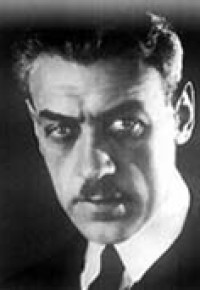
He worked in the ‘golden age’ of Swedish cinema, along with Victor Sjöström. He had a keen sense of comedy; critics have praised his film Ingeborg Holm as ‘the first realistic film in the world’. Stiller often adapted Selma Lagerlof’s works. Since he first began in the theatre, he was naturally inclined towards naturalism. Italian critic Mario Vardone claims that the father of modern film editing is Stiller, not Eisenstein. He influenced many directors, particularly Ernest Lubitsch. In 1942, he went to Hollywood with Greta Garbo, who was often a star of his films. Unfortunately, his health soon deteriorated and he had to quit directing. He died in Sweden with his friend Victor Sjöström at his side.
Filmography
- Street of Sin (1928)
- The Woman On Trial (1927)
- Barbed Wire (1927) (nepotpisan)
- Hotel Imperial (1927)
- The Temptress (1926) (nepotpisan)
- Gösta Berlings saga (1924)
- Gunnar Hedes saga (1923)
- De Landsflyktige (1921)
- Johan (1921)
- Fiskebyn (1920)
- Erotikon (1920)
- Herr Arnes pengar (1919)
- Sĺngen om den eldröda blomman (1919)
- Thomas Graals bästa barn (1918)
- Alexander den store (1917)
- Thomas Graals bästa film (1917)
- Hans hustrus förflutna (1916)
- Hämnaren (1916)
- Lyckonĺlen (1916)
- Balettprimadonnan (1916)
- Vingarne (1916)
- Kampen om hans hjärta (1916)
- Kärlek och journalistik (1916)
- Dolken (1915)
- Hans bröllopsnatt (1915)
- Lekkamraterna (1915)
- Minlotsen (1915)
- När konstnärer älska (1915)
- Mästertjuven (1915)
- Madame de Thčbes (1915)
- Kammarjunkaren (1914)
- Det röda tornet (1914)
- Skottet (1914)
- Stormfĺgeln (1914)
- För sin kärleks skull (1914)
- När svärmor regerar (1914)
- Bröderna (1914)
- Mannekängen (1913)
- Den Okända (1913)
- Pĺ livets ödesvägar (1913)
- Den moderna suffragetten (1913)
- När larmklockan ljuder (1913)
- När kärleken dödar (1913)
- Vampyren (1913)
- Barnet (1913)
- Den tyranniske fästmannen (1912)
- De svarta maskerna (1912)
- Mor och dotter (1912)