Cycle
From 01.09. To 15.09.2023.
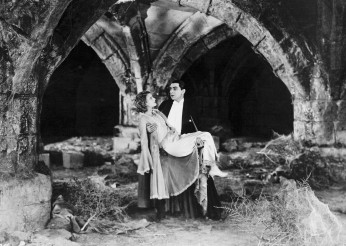
Universal's Movie Monsters
In the first half of Kina Tuškanac's September film program, cult American horror titles are featured, the protagonists of which are the popular Dracula, Frankenstein, Mummy and Werewolf, as well as numerous other celluloid monsters and their no less terrifying relatives!
Contrary to the summer cheerfulness and cheerfulness, but determined to prove that even gloomy days can be exciting, the September program of the Tuškanac cinema brings the cycle of Universal's movie monsters to the screen as a prelude to the autumn mood.
It is a series of cult American horror films dedicated to legendary celluloid monsters, which were produced by Universal Pictures in the period from the 1930s to the 1950s.
Dubbed icons of pop culture, Dracula, Frankenstein, Mummy and Werewolf are just some of the supernatural monster protagonists through whose terrifying actions, fate and legacy we will get to know the caricatured and dark, but inevitably tense side of science fiction.
Born out of the uncertainties and fears of poverty due to the Great Depression and in the years when the majority of the world's humanity smelled the coming of World War II, the specters of the screen were welcome exhaust valves.
Thus, Tod Browning and Karl Freund's Dracula with Bela Lugosi achieved great success in 1931, and in the same year, James Whale's Frankenstein was created, which, with a profit of over a million dollars, proved to be even more commercially successful, which is largely due to the master of the mask, Jack Pierce, and the emotional Boris Karloff's layering, which will especially come to the fore in the sequel to Bride of Frankenstein from 1935, again directed by Whale and starring Elsa Lancaster as the woman whose unrequited love makes the monster unhappy and confused.
Similar success was shared by Freund's Mummy from 1932 with the original story in which Karloff once again excelled, and the iconic status of the character was visually enhanced by Jack Pierce. A year later, Universal executives reached out to H.G. Welles' The Invisible Man, and the result was another great film by James Whale, in which distinguished British stage actor Claude Rains made his debut as the chemist Jack Griffin, and John P. Fulton provided innovative special effects. won an Oscar nomination.
In addition to the mentioned titles, during the first half of September it is possible to watch Hillyer's Dracula's Daughter (1936), Son of Frankenstein directed by Rowland V. Lee (1939), Waggner's Werewolf (1941), Young's The Mummy's Tomb (1942), but also Lubin's Phantom of the Opera (1943) and Arnold's Creature from the Black Lagoon (1954) and Revenge of the Creature (1955).
This and many other Universal monsters of speculative fiction and action horror will arouse nostalgia for childhood and parental intimidation, but also the subsequent fascination with popular bloodsuckers, zombies and mummies that, even after a century of creation, do not lose their power to cause a healthy horror discomfort that will give you a good shake for the lazy and rainy autumn days.